TECHNOLOGY
Machine-based coloration.
Not chemistry.
VERSUS CONVENTIONAL
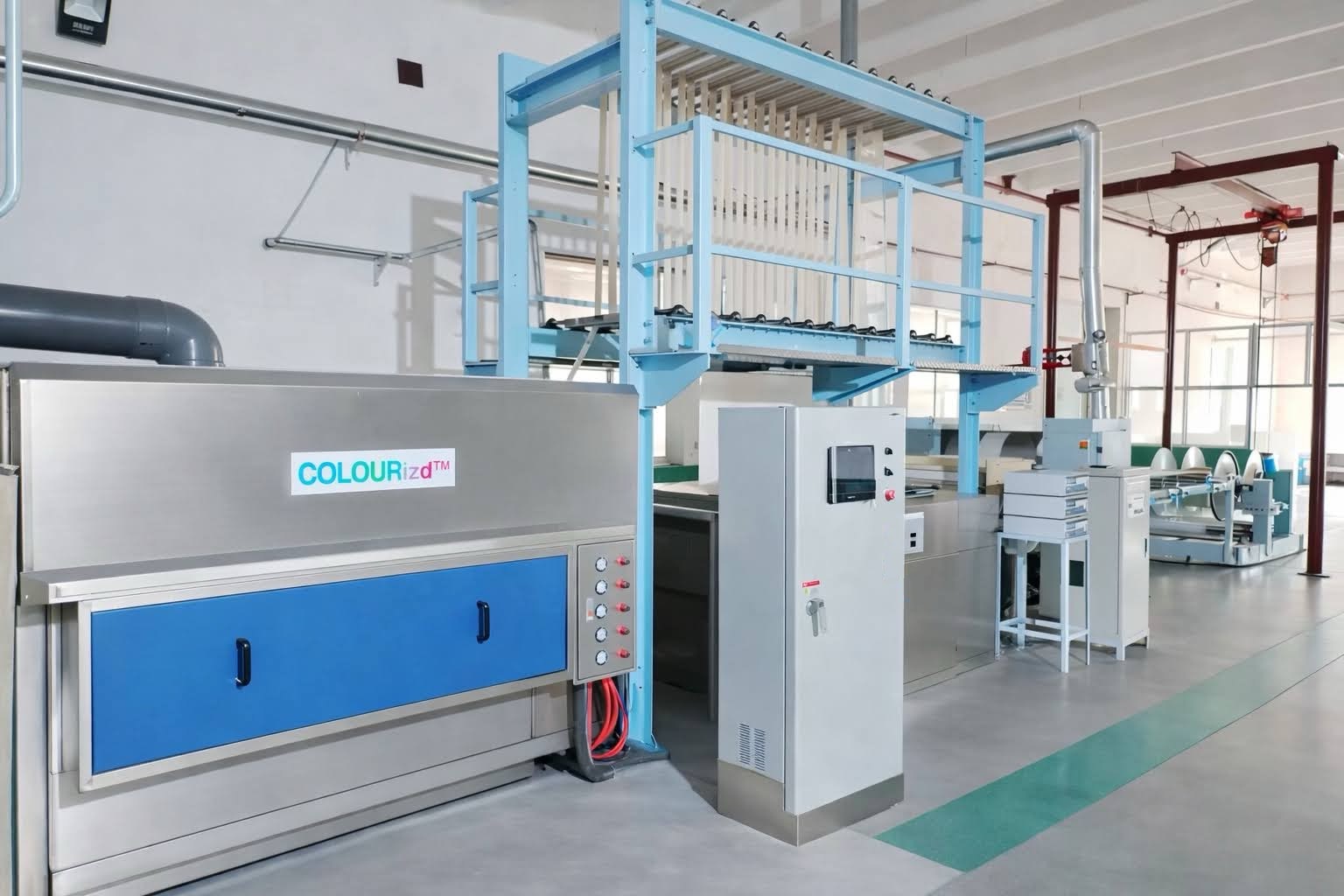
QuantumCOLOUR™ does not optimise wet processing. It removes most of it. Below is the conventional fibre-reactive yarn dye house — and what remains when QuantumCOLOUR™ replaces it.
METRIC
RELATIVE MAGNITUDE
ADVANTAGE
Water use
Litres per kg of yarn
Conv.
50–110 L
QC™
~1 L
–99%
vs. typical
Wastewater discharge
Treated effluent per kg
Conv.
50–110 L
QC™
0 L
ZERO
discharge
Auxiliary chemistry
Distinct process chemicals
Conv.
8–14 types
QC™
3 (colour, wetting agent, + binder)
–85%
chemistry
Process steps
From greige yarn to packaged
Conv.
8 stages
QC™
4 stages
–50%
stages
Energy profile
Process energy per kg
Conv.
Steam + hot water dominant
QC™
Electrical, application-configuration available
Electric
decarbonisable
Batch-to-batch variance
Colour consistency across runs
Conv.
pH / temp / chemistry sensitive
QC™
Machine-controlled
Repeatable
closed-loop
Conventional figures are industry reference ranges for fibre-reactive cotton yarn dyeing; actual mill performance varies. QuantumCOLOUR™ figures reflect commercial production data from COLOURizd installation on full scale industrialized equiptment.
SPECIFICATIONS
QuantumCOLOUR™ is a production system, not a pilot. Lines are engineered for continuous operation alongside existing yarn handling, winding, and finishing equipment.
YARN COUNT RANGE
Ne 1/1 – Ne 60/ spun yarn
LINE SPEED
25-35 meters/minute · configurable per yarn construction
WATER USE
~1 L per kg of yarn
WASTEWATER
Zero discharge
COMMERCIAL SINCE
2018
FOOTPRINT
Fits in standard mill building · no wastewater treatment facility required
FASTNESS
Meets or exceeds standards · as always dependent on color shade, chemistry, and finishing
CERTIFICATION
OEKO-TEX ECO PASSPORT capable · GOTS-compatible inputs available · ZDHC & bluesign chemistry available
THE ECONOMICS
“Something isn’t truly sustainable if it costs more. Fortunately, that’s not the conversation we’re having.”
Removing the dye house from the process doesn’t just reduce environmental impact — it changes the cost structure of yarn coloration. The savings come from multiple places simultaneously.
01
Lower coloration cost per kg
Fewer chemistry inputs, lower water consumption, and a simpler energy profile combine to reduce the cost of coloration meaningfully compared to conventional fibre-reactive dyeing. Actual savings vary by yarn type, colour depth, and local utility costs.
02
More finished yarn per unit of input
Conventional dyeing loses approximately 5% of fibre mass in processing. QuantumCOLOUR™ adds mass through colour and binder pickup. The result is roughly 10% more sellable yarn per kg of raw material — since yarn is sold by weight, this is a direct revenue advantage.
03
Infrastructure you don’t have to build
No wastewater treatment facility required. For mills adding capacity, replacing ageing equipment, or operating in markets where new wet processing permits are restricted, this is capital avoidance — not just an operating cost saving.
04
Rework and reprocessing eliminated
Machine-controlled application means the sample result is the production result. No shade correction cycles. No re-dyeing. No batch rejection costs. Consistency is engineered in — not managed after the fact.
The numbers depend on your specific operation. Yarn mix, production capacity, local utility costs, and your current dyeing setup all affect the final picture. COLOURizd can model the economics for your mill as part of an evaluation — using your actual figures, not industry averages.
NEXT
Applications across denim, knit, woven, and recycled constructions — or talk to our technical team about a specific yarn.
